Building A Security-First Culture In Your Business
It’s rare that you think about cybersecurity until something interrupts your working day. A strange email gets opened or somebody suddenly can’t access their account. Files disappear. Perhaps a supplier calls asking why they’ve received a payment request.
/JargonConfusion.png?width=287&height=204&name=JargonConfusion.png)
It’s then you stop and realize how much modern systems depend on trust.
Trust that the right people can access the right information. That staff will spot something suspicious before it becomes a problem, and that the systems holding your customer data are properly protected.
And in fairness, most businesses already have some security in place.
There’s usually antivirus software, backups, passwords, maybe a firewall.
The problem is that modern security problems aren’t always obvious. A lot of them start during completely normal moments. Somebody’s rushing between meetings and logs into what looks like Microsoft 365. An employee shares access to something because a colleague needs it urgently. A former staff member leaves and their accounts remain active because removing them drops down the priority list for a few weeks.
It’s everyday business life. And that’s what makes this difficult. It’s also why the businesses coping best with modern security risks are paying more attention to culture alongside technology.
When good habits become part of how people work, security improves almost naturally.
What A Security-First Culture Looks Like
When people hear the phrase “security-first culture”, they often imagine strict rules and nervous employees afraid to touch anything. But the healthiest businesses usually feel relaxed. People aren’t frightened of technology. They understand how to use it more carefully.
You can usually tell within a few conversations how a business approaches security. In some companies, staff share passwords casually because it feels quicker. Access to files grows over the years until almost everybody can see almost everything. Nobody is completely sure who still has access to old systems. Nothing bad has happened yet, so the issue never reaches the top of the list.
Other businesses feel different. Employees check unusual requests before acting on them. Access to systems is thought through properly. Somebody leaving the company triggers a clear process instead of a vague mental note to “sort it later”. It’s part of how the business operates.
Security works best when it stops feeling like a separate technical issue sitting in the corner and becomes part of normal decision making.
The businesses that handle this well usually haven’t achieved it through fear (or endless policy documents, which most people don’t read properly anyway). They’ve built it through repetition, communication, and sensible routines that people understand.
Why Businesses Fall Into Bad Habits
Most businesses already have some protection in place.
You might have security software, which helps detect harmful programs. You’ll likely have a firewall, which controls how your network connects to the outside world. These are still important and should always be there.
The problem is that many modern attacks don’t try to force their way in. They log in instead.
If someone has a real username and password, systems often treat them as a regular user. From the system’s point of view, everything looks fine.
There are also everyday habits that slowly increase risk.
Access is often given more widely because it’s quicker. Passwords get reused because it’s easier. Accounts stay active because removing them isn’t urgent.
It’s how busy businesses operate, but over time it creates a setup where it’s harder to see who has access and what they can do. Security now needs to match the way people work.
That includes remote access, mobile devices, and cloud systems. It means understanding who can get in, what they can reach, and how that access is being used.
Why Leadership Is Important
One thing becomes obvious when you work with businesses for long enough: Staff pay close attention to leadership behavior. If managers ignore security processes whenever they become inconvenient, employees notice. If directors regularly ask staff to share passwords “just this once”, that quickly becomes accepted behavior across the business.
The opposite is true as well. When leadership follows the same processes as everyone else, people take them more seriously. And thankfully, good leadership around security doesn’t require technical expertise. You don’t need to understand firewalls or encryption in detail. What matters more is the attitude around decision making.
Do people feel comfortable reporting concerns?
Do managers encourage sensible checking instead of rushing?
Are systems reviewed properly when staff join or leave?
Those things shape culture far more than annual training sessions do. Businesses can spend large amounts on security software and still run into avoidable problems because basic internal habits never improved. Businesses with far simpler systems can operate very securely if the culture around technology is healthier. Employees check things. Questions are encouraged. Processes are clear. Consistency makes a huge difference.
Making Secure Behavior Simpler
One of the smartest things a business can do is reduce the amount of effort required to work securely. If something feels awkward or frustrating, people will naturally look for workarounds.
Take passwords as an example. Most people now have dozens of accounts across different systems. Expecting employees to remember unique, complex passwords for every single one without any support is unrealistic.
That’s where password managers help. A password manager securely stores passwords for staff, which means they only need to remember one strong password instead of fifty different ones.
It usually improves security immediately because people stop relying on familiar favorites they’ve been reusing since around 2014. Multi-factor authentication helps in a similar way.
That’s the extra step where you confirm a login using your phone or an authentication app after entering your password. It adds a few seconds to the login process, but it prevents a huge number of account compromise attempts.
Good security often comes down to building systems that support people properly instead of expecting perfect behavior all the time.
The same applies to reporting problems. If employees aren’t sure who to contact about a suspicious email, many simply ignore it and carry on. If there’s a simple reporting process and a culture where questions are welcomed, problems get spotted much earlier. You want employees to feel comfortable enough to pause and check when something feels unusual.
Short Conversations Work Better Than Annual Training
Most people have experienced terrible security training at some point. A long presentation, endless slides, statistics nobody remembers. By the end, half the room is mentally planning dinner.
The businesses getting the best results usually handle awareness differently. Security becomes part of normal conversation.
-
A quick reminder about a new phishing scam that’s doing the rounds.
-
A short discussion during a team meeting.
-
A real example of how a business nearby was caught out.
Those smaller conversations tend to stick because they feel relevant to everyday work. And importantly, people need to feel safe admitting mistakes.
If somebody clicks something suspicious, the priority should be resolving the problem quickly, not embarrassing them in front of the team. Businesses where employees hide mistakes out of panic often discover issues much later than they otherwise would have done. That delay can turn a manageable situation into a much larger one.
The strongest security cultures have plenty of small checking conversations happening every week.
/SXIcon_SpearPhishing.svg)

"Were you expecting this file?"
/SXIcon_WireTransfer.svg)
"Can you double-check this payment request before I send it?
Putting The Right Protection Around The Business
Good habits are incredibly important, but they still need supporting with sensible technical protection. That includes things like keeping software updated, protecting devices properly, filtering suspicious emails, reviewing who has access to systems, and making sure backups are working.
Backups are particularly important because they give you a way to recover information if something goes wrong. But they do need testing occasionally. A backup that has never been checked properly can create an unpleasant surprise when you need it.
It also helps to think carefully about access. Most employees don’t need access to everything in the business. Modern systems allow access to be based around somebody’s role, which keeps things much easier to manage.
If an account is compromised, the damage is limited when permissions are controlled properly. This becomes especially important as businesses grow, because systems naturally become more complicated over time. More staff, software, suppliers, and more devices connecting remotely.
Without frequent reviews, it becomes increasingly difficult to keep track of who can access what.
Building Something Stronger Over Time
Improving your cybersecurity doesn’t mean changing everything at once.
It starts with getting a better understanding of what you have today.
-
Clearer processes around employee access
-
Better password protection
-
More awareness across the team
-
Frequent reviews of systems and permissions
-
Better conversations internally
And the businesses that handle this best usually are the ones where sensible habits have become part of normal working life. That creates confidence. People know what to do if something feels wrong. Leadership understands where the biggest risks sit. And systems are reviewed before problems appear, instead of afterwards. All it needs is attention and consistency.
Most businesses are already much closer to this than they think, they usually just need somebody to help connect the dots, tighten a few processes, and make sure the foundations underneath everything are rock solid.
That’s where a good IT support partner can make a real difference, by helping you build a business where security supports the way your team already works.
If you’re ready to build a stronger, more security-aware business without making day-to-day work harder for your team, we’d love to help. Get in touch.
Have Questions? Let's Chat!
Loading...
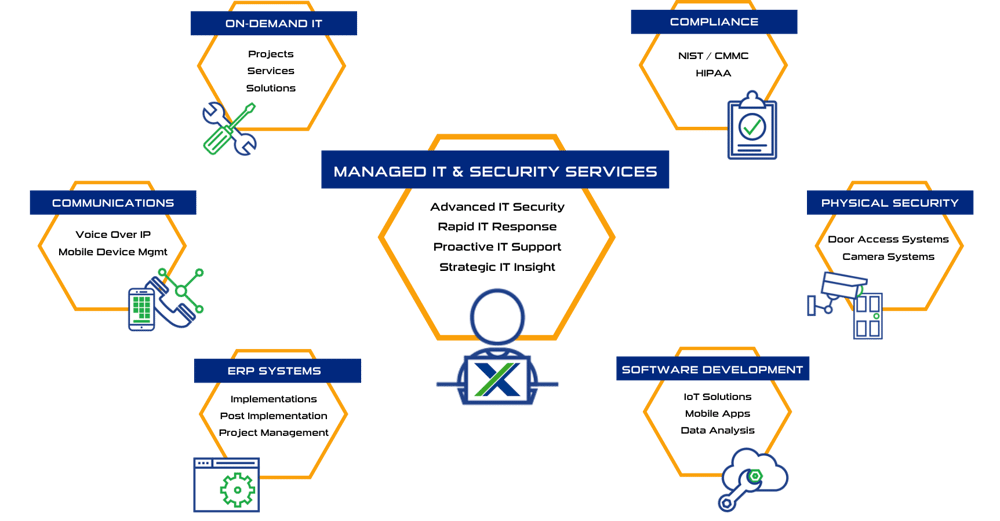
Some of Our Capabilities
About Us
Systems X provides IT solutions and strategic IT guidance with a human touch. Our purpose is to empower you to make better decisions with high-quality data and world-class service. Our creative thinking and purpose-driven solutions are the fundamental gears to guide the strategy that will connect your business with what’s next!!
Sales: (586) 884-7835
Service Desk: (586) 991-1050
COMPANY INFO
Managed Services in Chesterfield, MI
50801 E. Russell Schmidt Blvd, Chesterfield, MI 48051
Managed IT Services in Detroit
400 Renaissance Center Suite 2600 - #2073, Detroit, MI 48243
Managed IT Services in Ann Arbor
2723 S State St Suite 150 - #1690, Ann Arbor, MI 48104
Managed IT Services in Cleveland
1300 Superior Ave #3413, Cleveland, OH 44114
DUNS No.: 79-009-7088
CAGE Code: 8YVR5
NAICS Codes: 541511, 541512, 541513, 541519, 517911, 611420
RESOURCES
© 2026 Systems X Corporation