Is It Time To Move Your Business To The Cloud?
When you hear people talk about “the cloud”, it might sound mysterious or technical. In reality, it’s very simple.
The cloud means using powerful computers (called servers) in secure data centers that you access over the internet, instead of relying on the computers and equipment in your office.
If you’ve ever used online banking, Netflix, or email services like Outlook, you’ve already used the cloud. The same idea applies to your business. It’s about moving files, apps, and services from your office computers to secure, always-available systems online.
Think back a few decades (if you’re old enough). Business information lived in file cabinets, and only one person at a time could look at a paper file. Then came office computers and servers. Your own hardware sat in a cabinet or server room. Often expensive to buy and tricky to maintain.
Fast-forward to today, and business is no longer tied to one office or one machine. Staff work from home, clients expect fast responses, and projects often involve multiple people in different places. Relying on one computer or a single server in the office doesn’t fit how most businesses operate anymore.
That’s where the cloud comes in. Just as we moved from paper files to digital files, now we move from digital files stored locally to digital files stored securely online.
The cloud gives you the flexibility to access what you need, when you need it, wherever you are. It’s the next logical step in how businesses manage information and work together.
The Key Benefits Of Moving To The Cloud
So why should you move your business to the cloud? The short answer is: It makes life easier, safer, and often cheaper. But you want the long answer too, right?
Save Money & Cut Headaches
Running your own servers and equipment can be expensive. You pay for the hardware, the electricity, the cooling, the repairs, and the upgrades.
With the cloud, much of that cost disappears. You usually just pay a monthly subscription for the services you need, and the provider takes care of the rest.
Work Anywhere, Anytime
The cloud makes your business tools and data available wherever you have an internet connection. Whether you’re in the office, at home, or on the road, you can log in and get the same files and apps.
This flexibility has become vital as more staff work remotely or need to collaborate with others outside the office.
Collaborate More Easily
Gone are the days of endless email chains with different versions of the same document.
With cloud tools, everyone can work on the same file at the same time. You can see updates instantly, track changes, and keep projects moving without the confusion.
Keep Your Business Safer
It’s natural to worry about data security in the cloud. But leading providers invest far more in security than a small business ever could.
They use strong protections like encryption (scrambling your data so only the right people can read it) and multiple backups to keep your information safe.
Stay Up & Running, Even If Disaster Strikes
If your office server fails, or worse, if there’s a fire, flood, or theft, your data could be lost forever.
Cloud services are built with disaster recovery in mind. Your files are stored in multiple secure locations, so even if something goes wrong in one place, your business keeps going.
Scale Up Or Down Easily
With traditional IT, adding capacity means buying new equipment.
With the cloud, you can simply add more users or storage space when you need it. And reduce it when you don’t. You pay only for what you use.
What Are The Risks & Downsides
Moving to the cloud brings plenty of benefits, but it’s not a magic fix for everything. Like any business decision, there are a few risks and drawbacks you need to understand before jumping in.
You Depend On Your Internet Connection
The cloud lives online. That means if your internet goes down, your access to files and apps may pause until you’re back online.
For most businesses this isn’t a deal-breaker (many cloud services allow some offline use). But it’s worth considering how reliable your internet is and whether you need a backup option.
Ongoing Subscription Costs
With the cloud, you swap big one-time purchases for smaller monthly or yearly fees. While this makes budgeting easier, the costs do add up over time.
It’s important to regularly review your subscriptions to make sure you’re only paying for what you use.
Data Privacy & Compliance
When your data sits on servers owned by a provider, you need to trust that they’re handling it responsibly. Different industries have different rules about how data must be stored and protected (known as compliance).
Choosing a reputable provider, and getting advice on compliance, is essential.
Choosing The Wrong Provider
Not all cloud services are created equal. Some are secure and reliable, others… less so.
If you move your business into a low-quality or poorly managed cloud system, you could end up with downtime, security issues, or difficulties moving away later.
Staff Training
Cloud tools are powerful, but only if your team knows how to use them properly. Without training, people may cling to old habits or create messy workarounds that reduce efficiency and increase risks.
The downsides of the cloud are important to consider, but most of them can be managed with the right planning, the right provider, and the right support. For many businesses, the benefits still far outweigh the risks.
Your Cloud Options
There are different types of cloud setups. Understanding the basics will help you make the right choice for your business.
Public Cloud
This is the most common type of cloud, and the one many SMBs already use, often without realizing it. A public cloud service is shared by many customers at once. Think Microsoft 365 or Google Workspace.
The Good:
It’s affordable, reliable, and easy to get started. The provider handles all the hardware, updates, and security.
The Catch:
Because it’s shared, you don’t get as much control over how it’s set up.
Private Cloud
A private cloud is built just for your business. It might be hosted in your own office or with a specialist provider who sets aside dedicated servers just for you.
The Good:
You get more control, customization, and potentially stronger compliance with industry regulations.
The Catch:
It’s more expensive to set up and maintain, so it’s usually only used by larger companies or those with very specific needs.
Hybrid Cloud
As the name suggests, this is a mix of both. Some of your systems stay on-site or in a private cloud, while other parts move to the public cloud. For example, you might keep sensitive customer data in a private setup but use Microsoft 365 for email and documents.
The Good:
Flexibility. You get the best of both worlds.
The Catch:
It can be more complex to manage, so you’ll almost certainly need an IT support partner to help.
Cloud Security: Busting The Myths
One of the biggest worries business owners have about the cloud is security. If your data isn’t sitting on a computer you can see in the office, how can you be sure it’s safe?
The truth is the cloud can be more secure than traditional on-site systems. Let’s clear up some of the most common myths…
Myth 1: If It's Online, Anyone Can Access It
Not true. Cloud providers use encryption, a method of scrambling your data so only people with the right keys (like passwords and permissions) can read it.
Even if someone intercepted the data, it would look like nonsense without the key.
Myth 2: I'll Lose Control Of My Information
With cloud services, you still control who has access to your data. You can set permissions for each employee and remove them instantly if someone leaves the business.
In fact, this level of control is often stronger than what small businesses can manage on in-house systems.
Myth 3: Hackers Target The Cloud More Than Local Servers
The reality is that hackers target any weak system, wherever it’s hosted. Cloud providers invest heavily in security. Far more than the average small business could afford. They employ dedicated teams, run constant monitoring, and patch vulnerabilities quickly.
Myth 4: If Something Goes Wrong, I'll Lose Everything
Cloud services are designed with redundancy. Your data is stored in multiple secure locations. If one data center has a problem, another takes over. Compare that to a single office server where, if it fails, your data could be gone unless you’ve backed it up.
Shared Responsibility
It’s worth remembering that cloud security is a partnership. The provider secures the infrastructure (servers, data centers, encryption), while your business is responsible for things like choosing strong passwords, training staff, and setting access levels correctly.
The cloud is a security upgrade for most businesses. With the right setup and good habits, your data is safer in the cloud than sitting on a computer in the corner of your office.
Your Next Steps
You’ve seen that the cloud is the natural next step in how businesses use technology, moving from file cabinets to local servers, and now to secure, flexible, online systems.
It can save you money, make your team more productive, protect your data, and prepare your business for the future. Yes, there are risks and challenges, but with the right planning and the right partner, those can be managed.
So, what’s the next step for you? It starts with a conversation.
Every business is different, and the right cloud solution depends on your size, industry, and goals. Talking with an IT expert (like us) will help you figure out what to move first, how to minimize risks, and how to get your team onboard.
The important thing is not to put it off. Technology and client expectations are moving fast, and the longer you wait, the harder it may be to catch up.
If our team can help you decide whether the cloud is the right move for you, we’d be delighted to talk you through everything.
Have Questions? Let's Chat!
Some of Our Capabilities
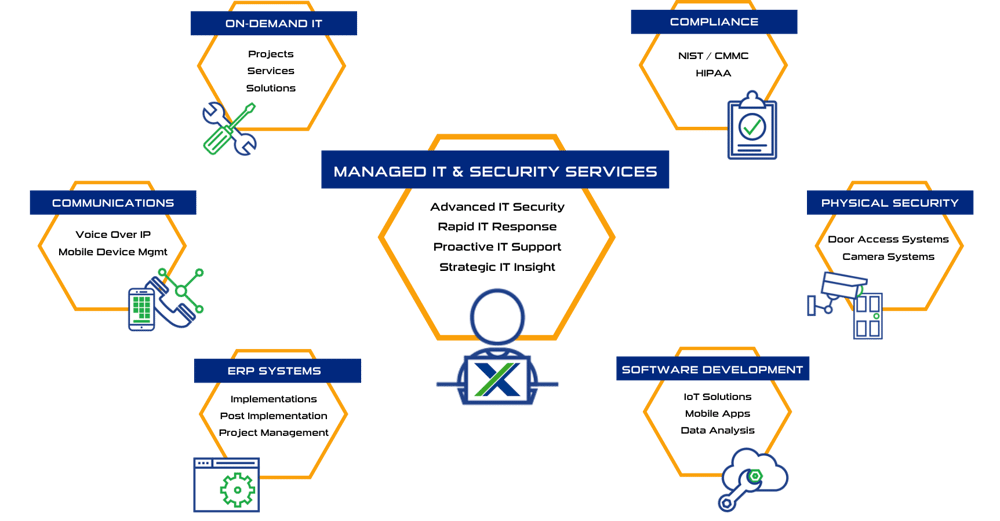
Systems X provides IT solutions and strategic IT guidance with a human touch. Our purpose is to empower you to make better decisions with high-quality data and world-class service. Our creative thinking and purpose-driven solutions are the fundamental gears to guide the strategy that will connect your business with what’s next!!
Sales: (586) 884-7835
Service Desk: (586) 991-1050
Managed Services in Chesterfield, MI
50801 E. Russell Schmidt Blvd, Chesterfield, MI 48051
Managed IT Services in Detroit
400 Renaissance Center Suite 2600 - #2073, Detroit, MI 48243
Managed IT Services in Ann Arbor
2723 S State St Suite 150 - #1690, Ann Arbor, MI 48104
Managed IT Services in Cleveland
1300 Superior Ave #3413, Cleveland, OH 44114
DUNS No.: 79-009-7088
CAGE Code: 8YVR5
NAICS Codes: 541511, 541512, 541513, 541519, 517911, 611420
© 2026 Systems X Corporation