 Mike Brattain
Why is Network Security Important for Your Business?
 Mike Brattain : Oct 31, 2024, 2:57:45 PM
Learn why network security is important for your business. Discover key reasons and strategies to protect your organization from cyber threats.
Cybersecurity insurance has become a crucial safeguard for businesses of all sizes. However, meeting specific compliance standards is critical in qualifying for this insurance. Let's walk you through the essential steps to ensure your business is well-positioned to obtain cybersecurity insurance coverage.
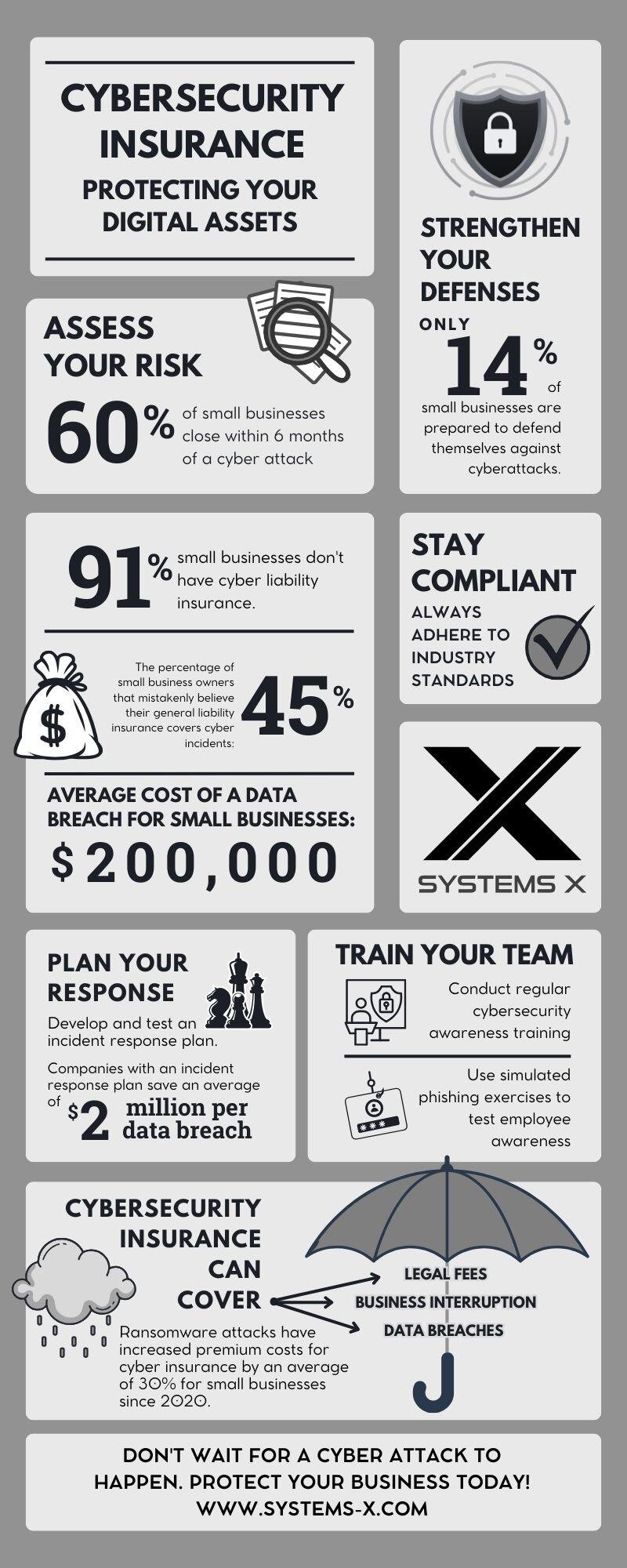
Before reviewing the steps to compliance, it's essential to understand what cybersecurity insurance is and why it's valuable:
Identify and document all potential cybersecurity risks to your business.
Evaluate your current security measures and their effectiveness.
Tip: Consider hiring a third-party cybersecurity firm for an unbiased assessment.
Use multi-factor authentication (MFA) for all user accounts.
Implement the principle of least privilege for user access.
Regularly review and update access permissions.
Create clear, documented cybersecurity policies and procedures.
Ensure all employees are trained on these policies.
Regularly update policies to address new threats and technologies.
Develop a detailed plan for responding to various types of cyber incidents.
Assign roles and responsibilities for incident response.
Conduct regular drills to test the effectiveness of your plan.
Keep all software, systems, and applications up-to-date.
Establish a systematic approach to patch management.
Tip: Automate updates where possible to ensure timely implementation.
Encrypt sensitive data both at rest and in transit.
Use industry-standard encryption protocols.
Tip: Remember mobile devices and removable storage.
Implement a backup strategy for all critical data.
Regularly test backups to ensure they can be successfully restored.
Store backups securely, preferably off-site or in a separate cloud environment.
Segment your network to limit the spread of potential breaches.
Implement continuous monitoring of your network for suspicious activities.
Consider using a Security Information and Event Management (SIEM) system.
Assess the security practices of your third-party vendors.
Ensure vendors comply with your security standards.
Regularly review and update vendor agreements.
Adhere to relevant industry standards (e.g., NIST, CMMC, ISO 27001, HIPAA, PCI DSS).
Obtain necessary certifications to demonstrate compliance.
Tip: Even if not required, following these standards can improve your insurability.
Qualifying for cybersecurity insurance requires a proactive approach to security and compliance. By following these steps and continuously improving your security, you'll increase your chances of obtaining insurance and better protect your business from cyber criminals, giving you a sense of control and preparedness. Cybersecurity is an ongoing process. Review and update your security measures regularly to avoid threats and maintain your insurance eligibility.
Download our comprehensive checklist* to track your progress and ensure you take all necessary steps to qualify for cybersecurity insurance.

 Mike Brattain : Oct 31, 2024, 2:57:45 PM
Learn why network security is important for your business. Discover key reasons and strategies to protect your organization from cyber threats.
 Mike Brattain : Apr 1, 2024, 9:29:02 AM
Maximize cyber insurance coverage with 5 benefits of partnering with an MSSP. Learn how MSSPs help meet insurance requirements, save costs, access...
 Mike Brattain : Feb 18, 2025, 5:55:34 AM
Explore cyber insurance costs, factors influencing premiums, and how much cyber liability insurance costs.